 Lush Vape
China Top Disposable Vape Suppliers Why Are They So Popular?
China’s disposable vape suppliers have become widely discussed in global supply chains. Their popularity comes from scale, speed, and flexible manufacturing. Many factories can develop compact devices, colorful packaging, and multiple flavor profiles within short production cycles. For retailers, this creates a broad product range without requiring large manufacturing facilities. For adult consumers, convenience and simple operation may explain part of the appeal. But convenience is not the whole story.
The question “why are disposable vapes so popular right now” needs a careful answer. Low unit costs, strong logistics networks, and rapid product customization all influence demand. Suppliers may offer private-label services, batch testing, and packaging adapted for different markets. Some also provide traceability documents and quality-control records. These details matter. A professional buyer should verify ingredient disclosures, battery safety, manufacturing consistency, and age-restricted sales procedures before placing an order. Marketing claims should never replace independent evidence.
There are limitations.
Disposable products can create more waste than reusable alternatives. Nicotine exposure also carries health risks, and these products are not appropriate for minors or non-users. Regulations differ widely, and importers remain responsible for compliance in their destination markets. Supplier popularity, therefore, should not be mistaken for universal approval. A reliable evaluation considers commercial performance, consumer safety, environmental impact, and legal responsibility together. Industry experience suggests that transparent documentation is valuable, yet documents alone may not prove every claim. Buyers should request current test reports and inspect production practices where possible. This balanced approach offers a clearer introduction to China’s disposable vape supply sector.
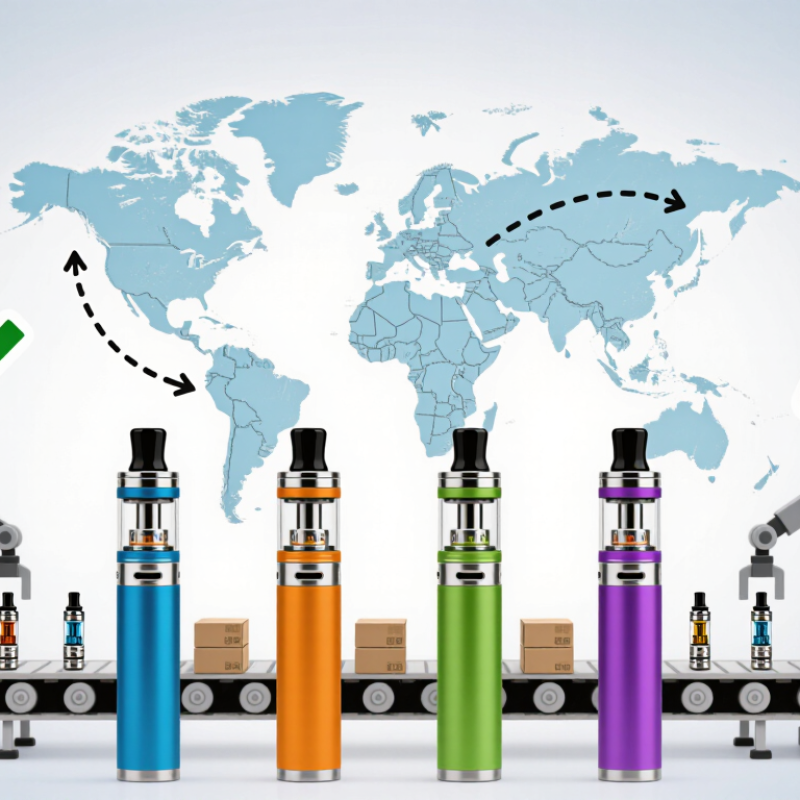
What Defines China’s Disposable Vape Supplier Industry?
China’s disposable vape supplier industry is defined by dense manufacturing clusters, fast engineering cycles, and export-oriented production. Grand View Research estimated the global e-cigarette market at about US$24.6 billion in 2023. This demand has encouraged suppliers to improve battery safety, leak resistance, and device consistency.
Professional suppliers now rely on ISO 9001 systems, batch records, and laboratory testing. They also verify materials, charging performance, and nicotine-free alternatives where required by local rules. The WHO reports that more than 100 countries regulate electronic nicotine products differently. Therefore, compliance cannot be treated as a final paperwork step. It must guide product design, packaging, and shipment screening. The picture is not perfect. Factory capability may vary between production lines, even within one facility.
Tips: Request recent test reports, production samples, and traceability records before ordering. Check whether the supplier can explain its quality-control process clearly. Ask for realistic lead times, not optimistic promises. A practical warning: low prices can hide weaker batteries, unstable heating, or incomplete documentation. Buyers should also confirm age restrictions, ingredient rules, recycling duties, and import requirements in every destination market. Supplier popularity comes from scale, customization, and speed, but reliability depends on evidence.
China Top Disposable Vape Suppliers: Why Are They So Popular? — What Defines China’s Disposable Vape Supplier Industry?
Key regulatory, product, manufacturing, and export factors shaping China’s disposable vape supplier industry. The figures below are based on publicly available regulations and technical standards rather than individual company or brand data.
| Industry Dimension | Verified Data or Requirement | Why It Matters to Buyers | Supplier Capability Commonly Evaluated | Reference |
|---|---|---|---|---|
| National Regulatory Framework | E-cigarette production, wholesale, and retail activities in China are subject to tobacco-monopoly administration and licensing requirements. | Legal authorization is a basic screening factor for domestic operations and regulated export supply chains. | Valid production, wholesale, or retail qualifications; traceable business registration; documented regulatory procedures. | State Council Information Office |
| Mandatory Product Standard | China’s mandatory e-cigarette national standard is GB 41700-2022, which took effect on October 1, 2022. | Products intended for the Chinese market must be designed and tested against a defined national technical framework. | Standard-based product specifications, material records, test reports, and change-control documentation. | National Standards Information Public Service Platform |
| Nicotine Concentration | GB 41700-2022 sets the nicotine concentration limit for e-liquid at no more than 20 mg/g. | Nicotine formulation directly affects compliance, labeling, testing, and market eligibility. | Batch-level formulation control, calibrated weighing systems, laboratory verification, and accurate labels. | GB 41700-2022 |
| E-Liquid Capacity | The Chinese national standard specifies a maximum liquid capacity of 2 mL for an e-cigarette cartridge. | Capacity influences puff estimates, packaging dimensions, shipping declarations, and product testing. | Accurate filling equipment, volume inspection, leak testing, and tamper-resistant packaging controls. | GB 41700-2022 |
| Permitted Flavor Direction in China | China’s domestic regulatory framework restricts e-cigarette flavors to tobacco flavor requirements and prohibits flavored products other than tobacco for the domestic market. | Flavor strategy must be separated by destination market; domestic compliance does not automatically equal overseas compliance. | Market-specific formulas, separate packaging files, flavor documentation, and destination-country regulatory review. | Administrative Measures on E-Cigarettes |
| Product Safety Testing | The national standard covers requirements related to materials, electrical safety, environmental safety, aerosol, and release testing. | Disposable devices combine battery, heating, electronics, plastics, and e-liquid, so safety testing is central to procurement decisions. | Battery safety tests, aerosol analysis, leakage testing, heating-element inspection, and finished-product sampling plans. | GB 41700-2022 |
| Manufacturing Model | China’s supplier base commonly combines component sourcing, electronic assembly, injection molding, battery integration, e-liquid filling, and final packaging within one regional supply network. | Integrated production can shorten development cycles and reduce coordination between multiple vendors. | In-house versus outsourced process mapping, supplier qualification, production capacity planning, and traceability by lot. | State Council Information Office |
| Quality Management | International buyers commonly request quality systems such as ISO 9001, although certification is not a substitute for product-specific regulatory approval. | A documented quality system improves consistency, corrective action, supplier control, and audit readiness. | Incoming inspection, in-process control, final inspection, nonconformity reports, CAPA records, and calibration certificates. | ISO 9001:2015 |
| Battery Transport | Lithium-ion batteries shipped internationally are regulated as dangerous goods and generally require UN 38.3 testing for transport. | Battery documentation affects freight acceptance, customs processing, packaging, and delivery reliability. | UN 38.3 test summary, battery specifications, transport packaging, safety data documents, and dangerous-goods shipping procedures. | UN Manual of Tests and Criteria / UNECE |
| Export Compliance | Export requirements vary by destination. The European Union, for example, applies the Tobacco Products Directive framework to nicotine-containing e-cigarette products. | A supplier must adapt specifications, warnings, packaging, notifications, and technical files to each target market. | Destination-market compliance review, multilingual packaging, technical files, ingredient disclosure, and shipment documentation. | European Commission — Tobacco Products Directive |
| Supply-Chain Advantage | The major competitive advantage is the concentration of electronics, battery, plastics, packaging, and assembly suppliers in established manufacturing regions. | Shorter procurement distances support faster prototyping, component substitution, and production scaling. | Local component availability, dual sourcing, lead-time control, tooling ownership, and contingency planning. | Ministry of Industry and Information Technology of China |
| Buyer Due Diligence | A reliable supplier evaluation should verify legal status, factory capability, product testing, battery documentation, quality controls, and destination-market compliance. | Low quoted prices alone do not demonstrate safety, legality, or consistent production quality. | Factory audit, sample approval, inspection plan, contract specifications, traceability requirements, and pre-shipment testing. | ISO Quality Management Principles |
Note: Regulatory requirements can change by country and product category. Buyers should confirm the latest rules with the relevant customs, tobacco-control, product-safety, and transport authorities before placing commercial orders.
FAQS
Connected industrial clusters support batteries, heating parts, plastics, packaging, and electronics. Production moves quickly between nearby suppliers.
No. Export figures combine several electronic vapor products. Treating all exports as disposable vapes creates a misleading estimate.
They often support flexible order sizes, varied battery capacities, packaging options, and testing procedures. Nearby partners can shorten development time.
Request business licenses, product specifications, safety reports, and traceability records. Keep everything in writing.
Check battery safety, leakage control, electrical performance, and packaging accuracy. Small labels matter.
Look for clean assembly areas, labeled shelves, and recorded quality checks. Empty records should raise questions.
No. Test samples from several batches. One perfect device proves very little.
Confirm minimum quantities, payment terms, inspections, and shipping responsibilities. Clear paperwork prevents avoidable disputes.
National rules differ and can change. Qualified local experts should review labels and instructions before production.
Trusting polished samples too quickly. Real reliability appears in repeat quality, records, and honest answers. My judgment could still be wrong.
Conclusion
China’s disposable vape supplier industry has become a significant part of the global vaping supply chain because it combines mature electronics manufacturing, efficient production systems, and extensive experience in battery-powered consumer devices. Suppliers typically manage product design, vapor technology, battery integration, materials selection, assembly, packaging, and quality testing under one coordinated process. This integrated approach allows them to develop compact, convenient, and user-friendly products for different markets. It also helps explain why are disposable vapes so popular right now: many consumers value their portability, simple operation, consistent performance, and low maintenance.
Chinese suppliers remain globally competitive through flexible customization, large-scale manufacturing, responsive communication, and cost-efficient sourcing. However, buyers should evaluate a supplier’s production capacity, quality-control procedures, testing documentation, material safety, product consistency, and ability to meet applicable regulations. Responsible cooperation also requires transparent specifications, reliable after-sales support, and careful attention to environmental considerations, including battery handling and waste reduction.
