If you keep asking, “why does my vape battery die so fast,” the answer may be a mix of everyday use and battery condition. A bright screen, high-power setting, or frequent draws can drain a charge sooner than expected. So can an older device. The change may feel sudden, even when the battery has been losing capacity gradually.
Start with simple observations. Does the charge drop faster at a higher power setting? Does the device sit unused but still lose power? Check that the charging cable and power adapter are compatible with the manufacturer’s instructions. Also look for a loose connection, heavy residue around the charging port, or a coil that needs replacing. These clues can help narrow down the cause, but they do not prove a battery is faulty. Device designs differ, and without the model and its history, no single diagnosis is reliable.
Pay attention to heat, too. A battery that becomes unusually hot, looks swollen, leaks, or has visible damage should not be charged or used. Stop and contact the manufacturer or a qualified service provider. Never open the device to inspect the battery yourself. Small habits can matter, but not every quick drain has a neat explanation. Sometimes the battery is simply worn out. This guide looks at common causes, safe checks, and signs that it may be time to replace the device rather than keep guessing.
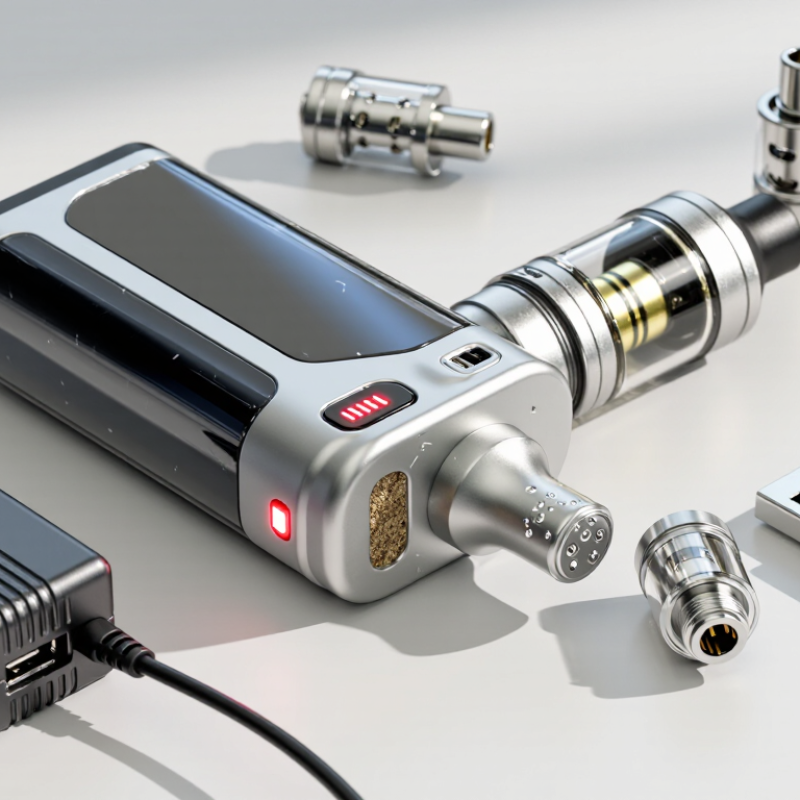
An 18650 cell rated at 2,500–3,500 mAh stores a certain amount of charge under specified test conditions. The number is useful, but it is not a promise of all-day runtime. Actual results vary with the device, the cell’s age, temperature, and how much power the device draws. Small differences matter.
Higher power demand can drain a cell sooner. A bright screen or frequent use may contribute, too. A cell that once lasted through the day may now need charging earlier as it ages. That can be normal, though sudden changes deserve attention. Check the device’s manual and use cells that meet its specifications.
Capacity figures can be easy to overread. mAh alone does not tell the whole story; voltage and the device’s power draw also affect runtime. Cold conditions may temporarily reduce performance. So can a worn or damaged cell. Don’t keep using a cell with a torn wrapper, dents, or unusual heat. I’d also avoid assuming that every battery with the same size and printed rating performs identically. Some uncertainty remains, especially when devices provide no clear power-consumption figures.
A 30 W setting sounds modest, but the battery must supply substantial current. Using the basic relationship power equals voltage multiplied by current, 30 W divided by 3.6 V is about 8.3 A. That is the ideal minimum at that voltage. Real devices lose some energy in their electronics, so battery current can be higher. Voltage also drops under load, especially when the cell is partly drained. The neat calculation is useful, but it is not the whole story.
Small details add up. Long pulls keep the coil firing; repeated pulls leave less time between bursts. A bright screen and other electronics use power too. As a battery ages, its usable capacity can shrink, so the same routine may no longer last as long. Heat matters. Cold conditions can also affect performance. Check the device’s specifications and use a battery with an appropriate continuous-discharge rating; do not judge safety from capacity alone. If the battery becomes unusually hot, damaged, or swollen, stop using it. One caveat: wattage settings, battery voltage, and conversion efficiency vary, so 8.3 A is an estimate, not a precise reading of every device.
Longer puffs keep the battery working for more seconds, so they consume more energy. Wattage matters too: higher power draws more energy during each second of use. As a rough comparison, a four-second puff at 15 watts uses about twice the energy of a two-second puff at the same setting. Real results vary with device efficiency and battery condition. The difference can feel small puff by puff. That adds up.
Frequent long draws at a high setting may leave less charge by evening than shorter draws at a lower setting. A warm device, an aging battery, or a bright display can also affect runtime, so puff length is not the only factor. Try using shorter draws and a lower wattage within the device’s stated range, then compare how long the charge lasts. Small changes matter. It is easy to blame the battery alone, but tracking your settings for a day may reveal a less obvious pattern. If runtime suddenly drops, stop using a damaged or unusually hot device and check its instructions.
Longer puffs and higher wattage use more energy per draw. The estimates below assume a 1,000 mAh battery rated at 3.7 V (about 3.7 Wh nominal) and do not account for device losses or battery aging.
| Power setting | Puff length | Energy per puff (approx.) | Estimated puffs per full charge* |
|---|---|---|---|
| 10 W | 2 seconds | 0.0056 Wh | About 666 |
| 10 W | 3 seconds | 0.0083 Wh | About 444 |
| 10 W | 5 seconds | 0.0139 Wh | About 266 |
| 20 W | 2 seconds | 0.0111 Wh | About 333 |
| 20 W | 3 seconds | 0.0167 Wh | About 222 |
| 20 W | 5 seconds | 0.0278 Wh | About 133 |
| 30 W | 2 seconds | 0.0167 Wh | About 222 |
| 30 W | 3 seconds | 0.0250 Wh | About 148 |
| 30 W | 5 seconds | 0.0417 Wh | About 88 |
*Idealized estimates calculated as power × puff duration, divided into 3.7 Wh. Real-world puff counts are usually lower and vary with battery condition, voltage conversion, device settings, and usage.
A vape battery can feel tired long before it stops working. One reason is capacity fade: the cell stores less energy as it ages, so the same device may need charging more often. Some lithium-ion cell datasheets specify about 300 charge-discharge cycles before capacity falls to 80% of its initial rating. That is a test result, not a promise for every battery. IEC 61960-3:2017 sets out performance test methods for portable lithium cells, and the conditions matter: temperature, charge rate, discharge rate, and cutoff voltage can all affect the result.
“Cycle” does not always mean one plug-in. It generally refers to using an amount of energy equal to a full charge, even if that happens across several partial discharges. Battery University’s technical note BU-808 also describes 80% capacity as a common end-of-life benchmark and explains how heat and deep discharges can shorten service life. In everyday use, a warm battery after repeated use may age faster than a gently used one. Still, cycle count alone feels too neat. Device power demand, battery condition, and charging habits all complicate the estimate. If runtime drops suddenly, aging is only one possibility; a device fault may also be involved.
Battery aging can reduce how much energy a lithium-ion cell holds. Some cell datasheets specify a cycle-life rating of 300 cycles until capacity reaches 80% of its initial value.
This illustrates one example of a datasheet rating, not a universal result. Actual capacity loss depends on the cell and its test and use conditions. A battery that drains quickly may also be affected by temperature, power settings, or device condition.
A vape battery’s capacity rating is usually measured under controlled conditions near 20–25°C, not in every setting you carry it through. That matters. On a cold morning, the cell’s internal resistance rises, so voltage can dip sooner under load. The device may feel weaker or shut off earlier, even though the battery has not permanently lost the same amount of capacity. Once it warms back toward room temperature, some performance may return. Cold does not explain every short runtime.
Heat affects the picture differently. A warm battery may perform normally at first, but repeated exposure to high temperatures can speed up long-term aging. Do not leave a device in direct sun or a hot car. Also, lab ratings are not a promise of your daily runtime: power setting, puff length, charging habits, and battery age all change the result. A useful check is to compare runtime in a room-temperature setting with your usual routine. Keep the conditions similar. If runtime remains unusually short, temperature may be only part of the story. It is easy to blame the weather and miss a worn cell or changed usage pattern.
It describes a cell’s charge capacity under specified test conditions. It does not guarantee all-day runtime.
High power demand, frequent use, or a bright screen can shorten runtime. An older cell may also store less energy.
No. Voltage and power draw matter too. Device specifications can be unclear, so estimates may be imperfect.
Yes. Cold conditions may temporarily reduce performance. A chilly outdoor walk can make the change noticeable.
An aging cell gradually stores less energy, so charging may be needed more often. The change can be gradual.
Some cell datasheets report this as a test result, not a universal lifespan. Actual results depend on test conditions and use.
Not necessarily. A cycle generally means using energy equal to a full charge, even across several partial discharges.
Stop using a cell with a torn wrapper, dents, or unusual heat. Don’t guess about visible damage.
Aging is one possibility, but a device fault may also be involved. The cause is not always obvious.
If you’re wondering, “why does my vape battery die so fast,” the answer may involve capacity, power use, and battery condition. Many 18650 lithium-ion cells are rated between 2,500 and 3,500 mAh, but that figure describes capacity under specified test conditions, not a guarantee of all-day runtime. A device drawing 30 watts from a cell at 3.6 volts requires about 8.3 amps, so higher power settings can use stored energy quickly. Longer, more frequent draws also increase the energy consumed.
Battery age and temperature matter, too. Some lithium-ion cell specifications list around 300 charge cycles before capacity falls to approximately 80% of its original level, though actual results vary. Capacity ratings are typically measured near 20–25°C; colder or hotter conditions can affect performance and runtime. Using a compatible, undamaged battery and charger, and following the device maker’s safety instructions, can help support reliable operation.

Lush Vape